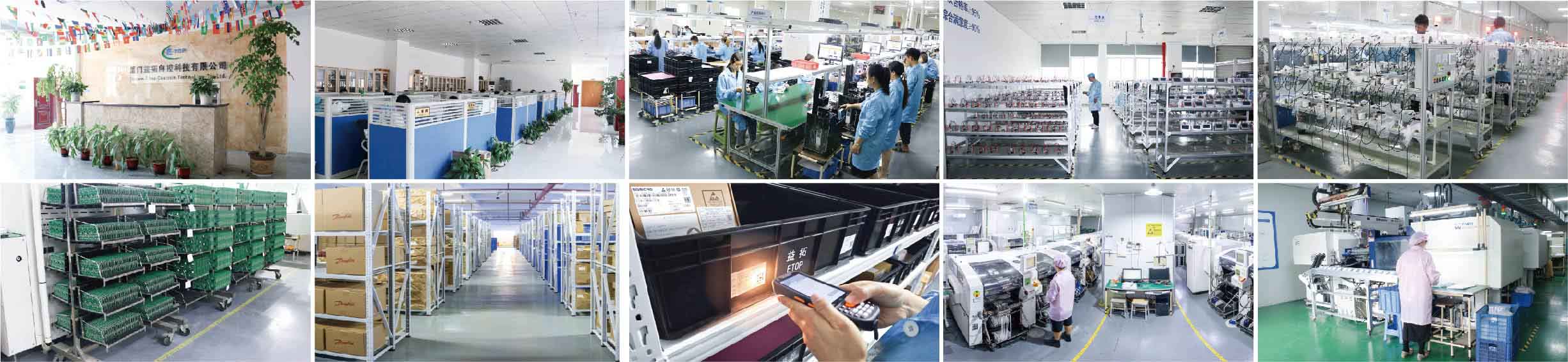
When B2B buyers evaluate a new HVAC control supplier, seeing a list of certifications on a brochure is expected. But understanding how a product earns those certifications is what builds real trust. Instead of just listing our specs, we are opening the doors to our 8,000 m² facility. Here is a step-by-step look at how E-TOP Controls takes a raw concept and turns it into a globally certified climate controller.
Phase 1: The R&D and Protocol Mapping
Long before physical manufacturing begins, a thermostat lives in our R&D software lab. Because modern smart buildings require complex communication, our 20-person engineering team maps out the specific IoT protocols required for the project.
If the unit is destined for a commercial BMS project, the firmware is hardcoded to support industrial fieldbuses like BACnet, Modbus, KNX, or OpenTherm. If it's a residential consumer product, the hardware layout is adjusted to house wireless antennas for Zigbee, LoRaWAN, RF (433/868/915MHz), or Bluetooth. By officially bridging our hardware with the Tuya Smart, Smart Life, Amazon Alexa, and Google Assistant ecosystems, we ensure the end-user gets a flawless mobile app experience right out of the box.
Phase 2: PCBA & In-House SMT Assembly
Once the design is locked, production moves to the Surface Mount Technology (SMT) floor. Unlike trading companies that outsource circuit boards, we print and populate our own PCBAs. Automated robotic arms place microchips onto the boards with pinpoint accuracy, followed by automated optical inspection (AOI) to catch any microscopic soldering defects. This in-house capability is how we comfortably push out over 5,000 units a day while maintaining strict batch consistency.

Phase 3: The Validation Lab (IQC, IPQC, FQC)
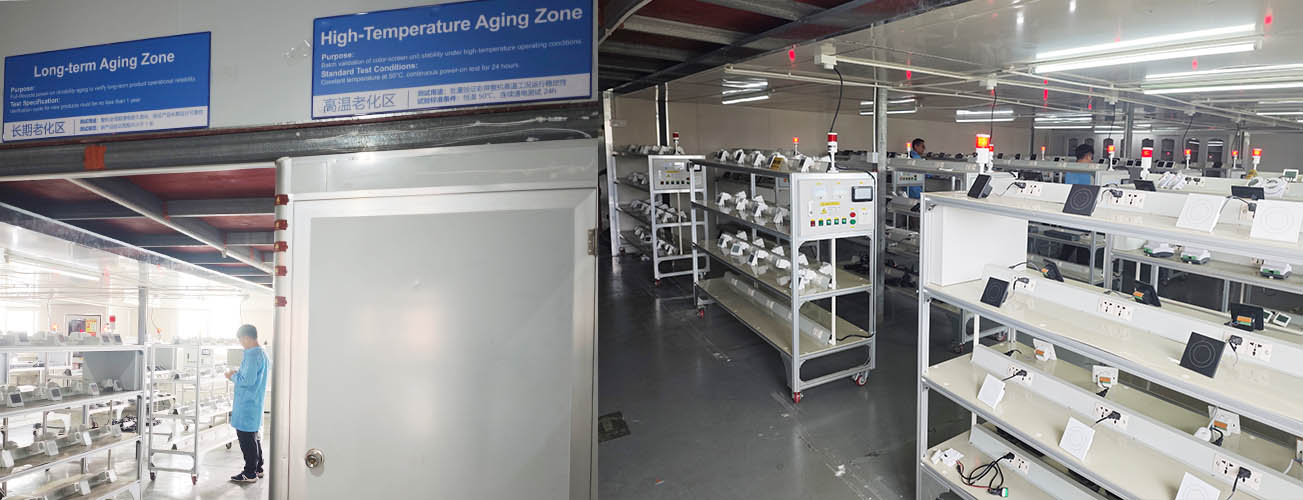
Assembly is only half the battle. Quality is our signature, which is why the most intense part of our factory is the testing lab. Operating under strict ISO 9001:2015 and ISO 14001:2015 management frameworks, every unit goes through a grueling QA process:
- The Aging Room: We power on the thermostats at peak electrical loads for extended periods to force any weak electronic components to fail in the factory, not in your customer's living room.
- Climate Chambers: We bake the units in extreme heat and freeze them in high humidity. This proves that our internal NTC sensor algorithms will not drift or lose accuracy over years of seasonal changes.
- Mechanical Abuse: Relays are cycled and buttons are pressed tens of thousands of times to simulate a decade of heavy use.
Phase 4: Global Compliance Testing
Only products that survive the validation lab move on to certification. Because our R&D and QA processes are so tightly controlled, our thermostats readily achieve the world's most recognized safety marks.
Our compliance portfolio includes TUV, ETL, CE (LVD, EMC, RED), and UKCA. We are also actively preparing our network protocols for the upcoming mandatory EU CRA (Cyber Resilience Act) to ensure data security. On the environmental side, our packaging and materials adhere strictly to RoHS, REACH, and the PPWR (Packaging and Packaging Waste Regulation). This guarantees our B2B partners face zero friction at customs.

📖 Explore more: Discover our full manufacturing capabilities in the Thermostat OEM & ODM Solutions category.