In a 50-room hotel, a sprawling office complex, or any multi-zone commercial property, reliable climate control isn't just a luxury—it's a requirement. While standard WiFi is the "go-to" for home automation, it often hits a wall in professional environments.
At E-TOP Controls, with over 20 years of expertise in HVAC control solutions, we’ve seen how connectivity choices impact the bottom line. If you are deciding between WiFi and Zigbee for your next big project, here is why Zigbee 3.0 is the industry-standard winner for professionals.
The Limitations of WiFi in Professional HVAC
Most WiFi routers are designed to handle 20-30 devices. In a commercial setting where you might have 50+ thermostats, plus guests' phones and laptops, the network becomes congested. This leads to:
Latency: Delayed response to temperature adjustments.
Drop-outs: Thermostats frequently going offline.
High Maintenance: Constant troubleshooting of router-client connections.
4 Reasons Professionals Are Switching to Zigbee 3.0
1. Self-Healing Mesh Networking
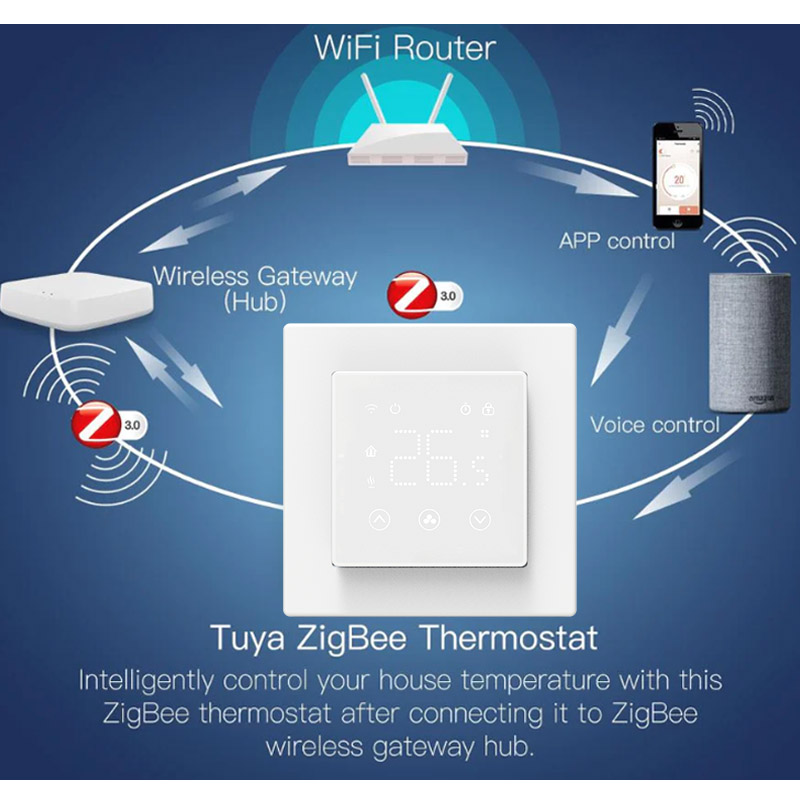
Unlike WiFi’s "star" topology (where every device must talk to the central router), Zigbee uses a mesh network. Each thermostat acts as a repeater, passing data to the next.
The Advantage: If one node fails, the data simply finds another path. In multi-zone commercial HVAC projects, this has been shown to reduce connectivity-related service calls by up to 85%.
2. Industry-Leading Battery Life
WiFi is power-hungry. For battery-operated smart thermostats, this means frequent and costly battery replacements across hundreds of rooms.
The Advantage: Zigbee 3.0 modules are engineered for ultra-low power consumption. With optimized "sleep" cycles, standard AA batteries in an E-TOP Zigbee thermostat can last 1.5 to 2 years, significantly lowering operational costs for facility managers.
3. "Always-On" Local Control
What happens if the building’s internet goes down? WiFi-dependent systems often lose their "smart" logic and scheduling when they can't reach the cloud.
The Advantage: Zigbee keeps the logic local. All schedules and multi-zone orchestration stay within the local network gateway. Your HVAC system continues to run reliably, even if the external internet connection fails.
4. Scalability and Future-Proofing
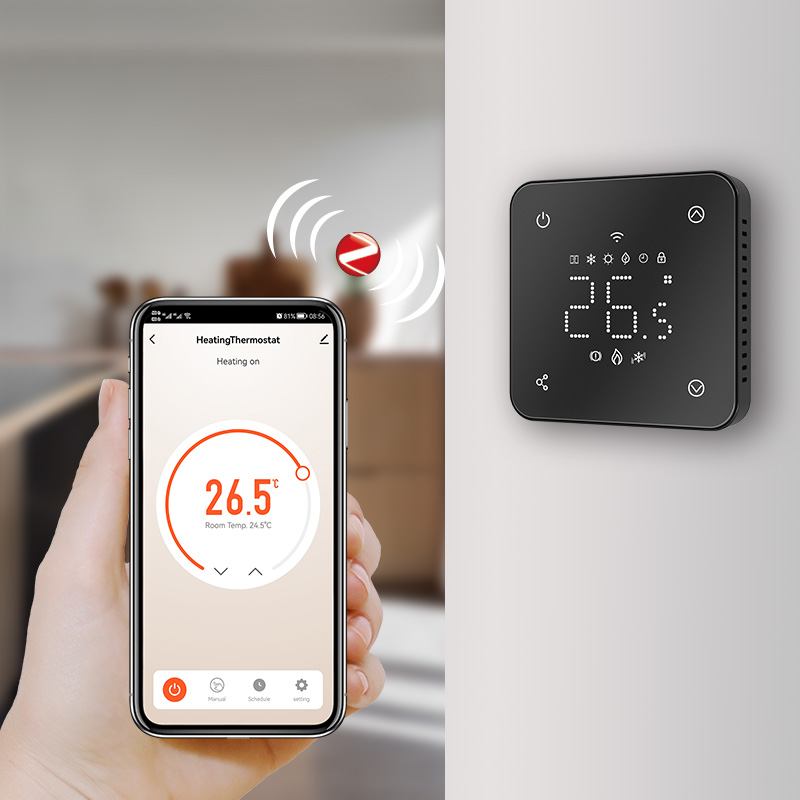
Zigbee 3.0 is a global, unified standard. It integrates seamlessly into modern smart building ecosystems (including Matter and Thread-ready platforms).
Comparison at a Glance: Zigbee vs. WiFi
| Feature | WiFi Thermostats | Zigbee 3.0 Thermostats |
| Ideal Use Case | Small Residential | Large Commercial / Hotels |
| Device Capacity | Low (Limited by router) | High (Up to 65,000+ nodes) |
| Power Consumption | High | Ultra-Low |
| Reliability | Depends on Internet/Router | Self-healing Mesh Network |
| Offline Control | Limited | Full Local Logic |
Bottom Line: Reliability Over Hype
For professional HVAC installers, stability is the only metric that matters. Zigbee 3.0 delivers the robust connectivity and long-term cost savings that WiFi simply cannot match in a commercial scale.
Partner with E-TOP Controls
Looking for a trusted partner for your next project? E-TOP Controls provides tailored OEM/ODM solutions, including our flagship Zigbee 3.0 Fan Coil and Underfloor Heating thermostats.
Ready to upgrade your HVAC project?
Inquire Now: info@etopcontrols.com