When you pour a glass of water from a countertop cold water dispenser, how cold do you expect it to be?
Most people probably would not know the exact answer. They may simply describe it as “cool,” “cold,” or “cold enough.” But there can be a noticeable difference between water that is simply cooler than room temperature and water that feels genuinely chilled.
That is where temperature starts to matter.
A few degrees may look insignificant on a product specification sheet, but they can change the way cold drinking water feels in everyday use. For people who prefer properly chilled water without adding ice, around 7°C can create a noticeably different experience.
What Does “Cold Enough” Actually Mean?
“Cold enough” is not a universal temperature.
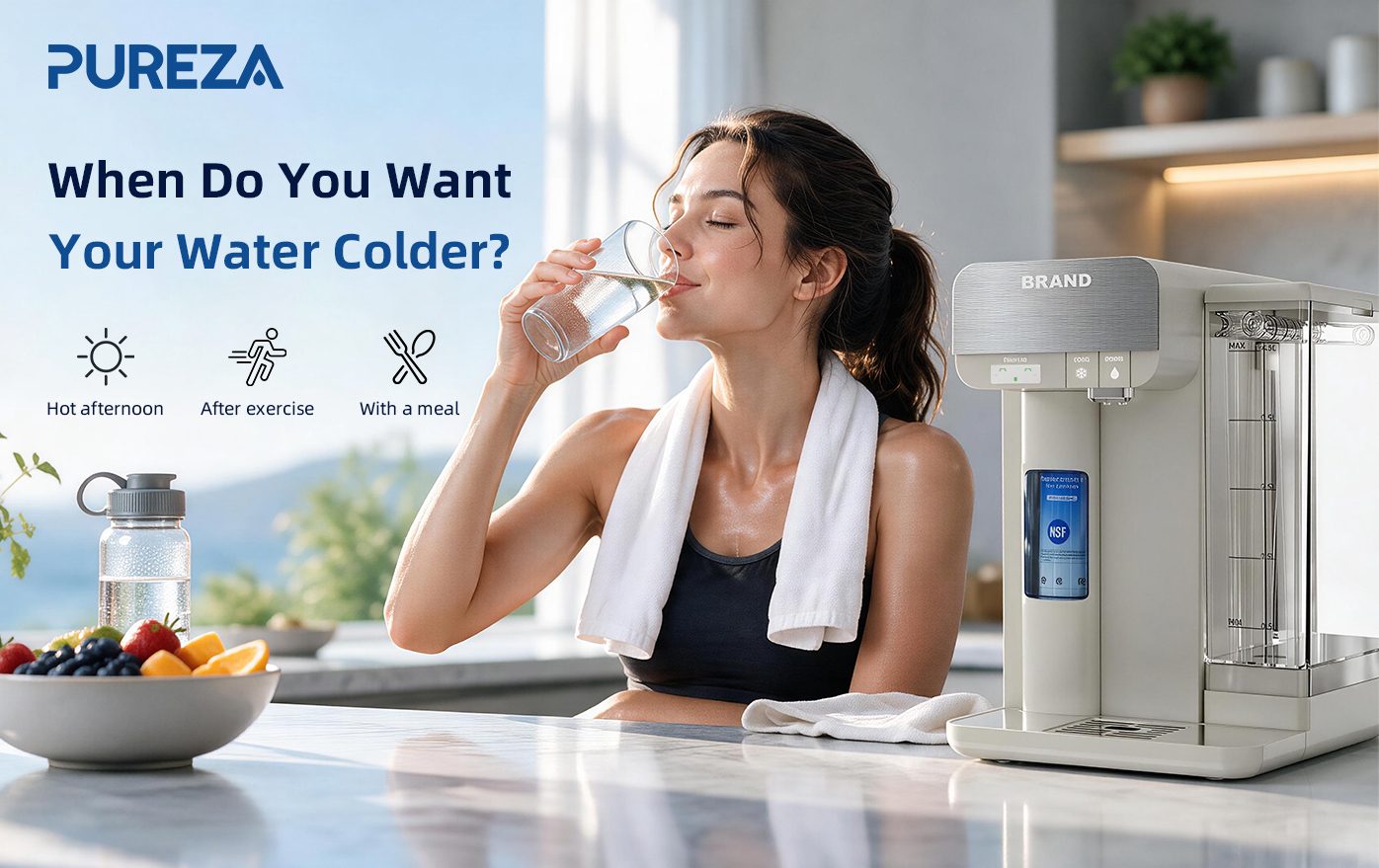
Some people prefer water close to room temperature. Others want their drinking water to feel distinctly chilled, especially after exercise, during a hot afternoon, or with a meal.
This is why modern water dispensers often define their cold-water performance with an actual temperature range instead of simply saying “cold.” Current countertop water dispensers on the market commonly describe chilled water in ranges such as 6–10°C or 7–10°C, while some models offer adjustable cooling starting at around 7°C.
So, what makes 7°C interesting?
It is low enough to give water a distinctly chilled feeling, while still being a practical target for everyday drinking. The difference becomes easier to understand when you compare how different temperatures are perceived.
|
Water Temperature |
How It May Feel |
Typical Use |
|
Room temperature |
Neutral, less refreshing |
Everyday hydration |
|
Around 10°C |
Cool and refreshing |
Regular chilled drinking water |
|
Around 7°C |
Noticeably chilled |
When you want a colder, more refreshing drink |
|
Near ice-water temperature |
Very cold |
Occasional preference, often with ice |
The important point is not that one temperature is “right” for everyone. It is that 7°C gives the word “cold” a more tangible meaning.
Why Can a Few Degrees Feel So Different?
Imagine taking two glasses of water: one at around 10°C and another at around 7°C.
On paper, the difference is only three degrees. In daily use, however, the experience can feel different because temperature is one of the first things you notice when drinking water.
The first sip provides an immediate sensory cue. Cooler water can feel more refreshing, particularly when you are already warm or thirsty.
Think about coming home on a hot afternoon. A glass of water that is simply below room temperature may feel pleasant. A more thoroughly chilled glass can create a stronger sense of refreshment.
That does not mean colder water is automatically better. Rather, it means that water temperature changes the drinking experience.
This is one reason cold-water performance deserves more attention when choosing a countertop cold water purifier. Instead of looking only at whether a dispenser has a “cold” setting, it is worth asking a more specific question:
How cold does the water actually get?
7°C vs. “Cold Enough”: What Are You Really Choosing?
When shopping for a chilled water dispenser, consumers often compare features such as filtration, capacity, design, and dispensing speed. Temperature can sometimes become just another number in the specification list.
But temperature is actually something you experience every time you use the machine.
A dispenser that produces water around 7°C can make a difference when you specifically want chilled water rather than simply filtered water.
A dispenser that produces water around 7°C can make a difference when you specifically want chilled water rather than simply filtered water.
For example, imagine three everyday situations.
You wake up in the morning and want a glass of water. You may prefer something cool and easy to drink.
After a workout, you reach for cold water because you want something immediately refreshing.
Later in the afternoon, when the kitchen is warm, you want a chilled drink without waiting for a bottle in the refrigerator.
In each situation, the definition of “cold enough” can change. The value of a countertop cold water dispenser is that chilled water is available as part of the appliance's normal operation rather than requiring a separate step.
Temperature Is Only Part of the Experience
Of course, reaching 7°C is not the only thing that determines whether a cold water dispenser feels convenient.
A good countertop water dispenser needs to make the entire process easy: filling, cooling, dispensing, and repeating the process throughout the day.
This is where factors such as cold-water reservoir capacity and flow rate become relevant.
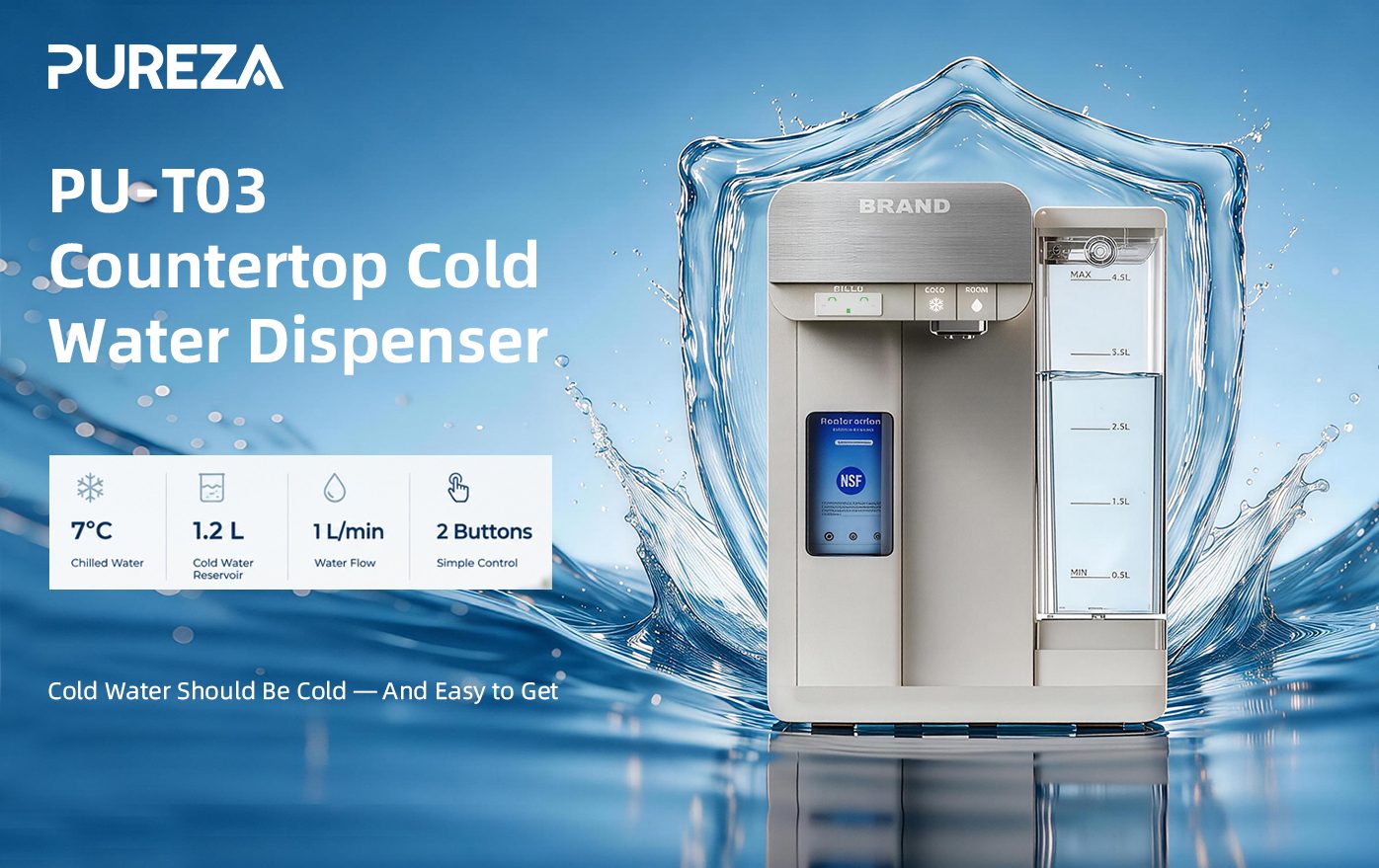
For example, a 1.2 L chilled-water reservoir provides a practical supply of cold water for everyday use, while a flow rate of 1 L/min or more helps make dispensing feel less restrictive when filling a glass or bottle.
In other words, cold water should not only be cold—it should also be easy to access.
This distinction matters because a technically low temperature does not automatically create a good user experience. If getting a glass of cold water requires too many steps, users may simply stop paying attention to the temperature altogether.
How PU-T03 Brings 7°C Into Everyday Use
The PU-T03 countertop cold water dispenser is designed around this idea: make genuinely chilled water part of a simple daily routine.
Its cooling temperature reaches 7°C, giving users a distinctly chilled option without relying on manually adding ice. The system also features a 1.2 L cold-water reservoir and a 1 L/min+ flow rate, balancing chilled-water availability with convenient dispensing.
But temperature is only one part of the PU-T03 experience.
The dispenser also uses a simple two-button control system. Instead of filling the front panel with multiple settings, the design focuses on the functions users are most likely to use.
That creates a straightforward interaction:
Choose → Dispense → Drink.
For a countertop cold water dispenser, simplicity can be just as important as technical performance. The less effort required to get a glass of chilled water, the easier it is for the appliance to become part of everyday life.
Is 7°C Always the Best Temperature?
Not necessarily.
Water temperature is ultimately a matter of personal preference and situation. Some people enjoy moderately chilled water, while others prefer it colder. A family may even have different preferences at the same kitchen counter.
That is why 7°C should not be presented as a universal “perfect” temperature.
Instead, it is better understood as a deliberate design choice for people who want their drinking water to feel properly chilled.
The real question is not:
“Is 7°C better than every other temperature?”
It is:
“Does 7°C match the kind of cold-water experience you want?”
For someone who regularly reaches for chilled water, the answer may be yes.
Cold Enough Is a Feeling—7°C Gives It a Number
“Cold enough” sounds subjective, but temperature gives that feeling a measurable reference point.
At around 7°C, water can feel distinctly chilled without needing to be turned into ice water. Combined with a 1.2 L chilled-water reservoir, a 1 L/min+ dispensing rate, and a simple two-button interface, the PU-T03 is designed to make that experience easy to repeat throughout the day.
A modern countertop cold water dispenser does more than provide filtered water. It can also shape how that water feels when you drink it.
And sometimes, the difference between “cool” and “properly chilled” really does come down to a few degrees.