Choosing the right wood is one of the most important decisions when buying or manufacturing an outdoor chicken coop. The timber affects structural strength, weather resistance, maintenance requirements, product weight, and ultimately the cost of ownership. Fir, pine, and cedar are three commonly discussed options, but they do not perform equally in every application.
For poultry equipment distributors, farm retailers, and backyard poultry brands, the question is not simply which wood is the strongest. It is which material offers the right balance of durability, manufacturing cost, appearance, and long-term value for the target market.
This guide compares fir vs pine, examines the advantages and limitations of cedar, and explains how to evaluate wooden coop materials before placing a wholesale order.
Quick Answer: Which Wood Is Best for a Chicken Coop?
For many commercially manufactured outdoor chicken coops, fir offers a practical balance of structural performance, workability, availability, and cost. Pine is another cost-effective option, particularly when the timber is properly dried and protected against moisture. Cedar is valued for its natural resistance to decay and attractive appearance, but its higher material cost may not be justified for every product range.
The best choice depends on the coop's construction, local climate, expected service conditions, and target retail price. A well-designed fir coop with proper roof protection and suitable surface treatment can be a more commercially practical choice than a poorly constructed coop made from a more expensive wood.
1. Fir Wood: A Practical Choice for Structural Chicken Coops
Fir is widely used in wooden furniture, outdoor structures, and animal housing because it offers a useful combination of strength, relatively low weight, and workability. Its straight grain makes it suitable for cutting, drilling, fastening, and assembling repeated components.
For chicken coop manufacturers, these characteristics are valuable. Frames, support rails, roof structures, doors, and wall panels require consistent dimensions and reliable connections. Fir can be processed into standardized components, helping manufacturers maintain repeatable production quality.
Advantages of fir
- Good structural potential: Appropriate grades of fir can provide reliable support for frames, roof structures, and other load-bearing components.
- Easy processing: Its workability supports cutting, drilling, assembly, and customized product dimensions.
- Commercial cost balance: Fir can be a practical option for manufacturers seeking a balance between material cost and product performance.
- Natural appearance: Its light color and grain can work with different stains, paints, and outdoor design styles.
What should buyers pay attention to?
Fir should not be treated as automatically waterproof or rot-proof. Prolonged exposure to rain, standing water, and ground moisture can damage untreated timber. The quality of drying, moisture control, roof coverage, drainage, and surface finishing all influence its outdoor performance.
For a commercial fir wood chicken coop, buyers should check whether the base is raised, whether the roof sheds water effectively, and whether exposed edges and joints receive suitable protection.
2. Pine Wood: Cost-Effective and Easy to Manufacture
Pine is a common softwood used in furniture, construction, and outdoor products. It is generally easy to machine and widely available in many markets. For manufacturers producing entry-level or mid-range chicken coops, pine can help control material costs while maintaining a natural wooden appearance.
Advantages of pine
- Accessible material supply: Pine is available in many timber markets, making it suitable for standardized production.
- Easy customization: It can be cut, drilled, painted, and assembled into different coop designs.
- Competitive pricing: It can support price-sensitive product ranges and volume orders.
- Flexible appearance: Paint and stain options allow brands to develop different colors and finishes.
Limitations of pine
Pine varies considerably by species, grade, density, and moisture content. Some boards contain knots or other natural characteristics that can affect appearance and consistency. Like many untreated softwoods, pine can absorb moisture and deteriorate if it remains wet or is installed close to damp ground.
Wholesale buyers should ask suppliers about timber grading, drying standards, knot selection, and the finishing process. A low purchase price does not necessarily mean a lower long-term cost if the product requires frequent repairs or generates customer complaints.
3. Cedar: Natural Decay Resistance at a Higher Cost
Cedar is often selected for outdoor applications because many cedar species contain natural compounds that help the wood resist decay and insect attack. It is also valued for its distinctive grain and color. These characteristics make cedar attractive for premium garden structures and outdoor products.
Advantages of cedar
- Natural decay resistance: Certain cedar species perform well in outdoor environments when appropriately selected and installed.
- Distinctive appearance: Its natural color and grain can support a premium product position.
- Relatively light weight: Many cedar varieties are comparatively lightweight for their size.
- Reduced dependence on some preservative treatments: Natural durability can be beneficial, although exposed surfaces and construction details still require attention.
Why cedar is not always the best commercial option
Cedar generally costs more than common fir or pine options. Its suitability also varies by species and grade. For large chicken coops, where the product includes a frame, nesting box, roof supports, doors, and an extended run, using cedar throughout the entire structure may increase the retail price substantially.
There is another important consideration: cedar is not a single standardized material. Different cedar species have different properties. Buyers should identify the exact species and intended application rather than relying on the word "cedar" as a general quality guarantee. Avoid assuming that aromatic wood products or untreated cedar are automatically appropriate for every enclosed animal-housing application. Ask for material specifications and evaluate the finished product in its intended use.
4. Fir vs Pine vs Cedar: Side-by-Side Comparison
| Evaluation Factor | Fir | Pine | Cedar |
|---|---|---|---|
| Structural use | Good, depending on grade | Good, depending on species and grade | Suitable for many outdoor components |
| Natural decay resistance | Generally requires protection | Generally requires protection | Often higher, species-dependent |
| Workability | Good | Good | Good, but varies by species |
| Material cost | Often moderate | Often economical | Usually higher |
| Appearance | Light, relatively uniform | Natural grain, varies by grade | Distinctive color and grain |
| Typical commercial role | Frames and general coop construction | Cost-conscious product ranges | Premium outdoor components |
This comparison is a general purchasing guide, not a universal engineering specification. Actual performance depends on the exact species, timber grade, moisture content, dimensions, treatment, and construction quality.
5. Five Factors That Matter More Than Wood Type Alone
When evaluating the best wood for chicken coop production, buyers should look beyond the timber name. The following details often have a greater influence on product performance.
1. Timber moisture content and drying
Timber that has not been properly dried may shrink, twist, or crack as it loses moisture after assembly. Ask the manufacturer how the wood is dried and how moisture consistency is controlled before production.
2. Ground clearance and drainage
The lower frame is especially vulnerable to water exposure. Raised legs, suitable feet, and a well-designed base help reduce direct contact with wet soil. A coop should not rely on surface coating alone to protect a poorly designed base.
3. Roof construction
A sloped roof, adequate overhang, and water-resistant roofing material help keep rain away from timber walls and joints. Roof design should be considered as part of the complete weather-protection system.
4. Surface finish and animal safety
Paints, coatings, adhesives, and preservatives should be selected for the intended animal-housing application. Buyers should request relevant product information and avoid assuming that a coating is safe simply because it is marketed as eco-friendly. Allow finishes to cure according to the manufacturer's instructions before the coop is put into use.
5. Joints, fasteners, and replaceable parts
Outdoor structures are exposed to repeated expansion, contraction, and movement. Check the quality of screws, hinges, mesh fixing points, and frame connections. Replaceable panels and accessible hardware can also reduce maintenance costs over the product's service life.
6. Which Wood Should Retailers and Distributors Choose?
Different wood types can support different market positions:
- Entry-level and value-oriented ranges: Pine or fir may be suitable when the timber grade, finishing, and construction meet the target quality requirements.
- Mid-range outdoor chicken coops: Fir can offer a practical balance of structural performance, processing efficiency, and material cost.
- Premium garden products: Cedar may be worth considering when natural appearance and species-specific durability justify the higher material cost.
- Customized product programs: A combination of materials may be more economical than using one premium timber throughout the structure.
Retail buyers should also compare the complete product specification: dimensions, flock capacity, nesting-box layout, run area, roof material, wire mesh, packaging, assembly instructions, and replacement-part availability. These factors directly affect customer satisfaction and after-sales workload.
7. How Shaw Ye Approaches Wooden Chicken Coop Manufacturing
For buyers sourcing wooden poultry housing, the manufacturing process matters as much as the selected timber. Shaw Ye, operated by Fuzhou Shaw Ye Arts & Crafts Co., Ltd., has more than 20 years of experience in wooden pet-house and animal-cage production. Its product range includes wooden chicken coops and other wooden pet houses, with customization available for different product requirements.
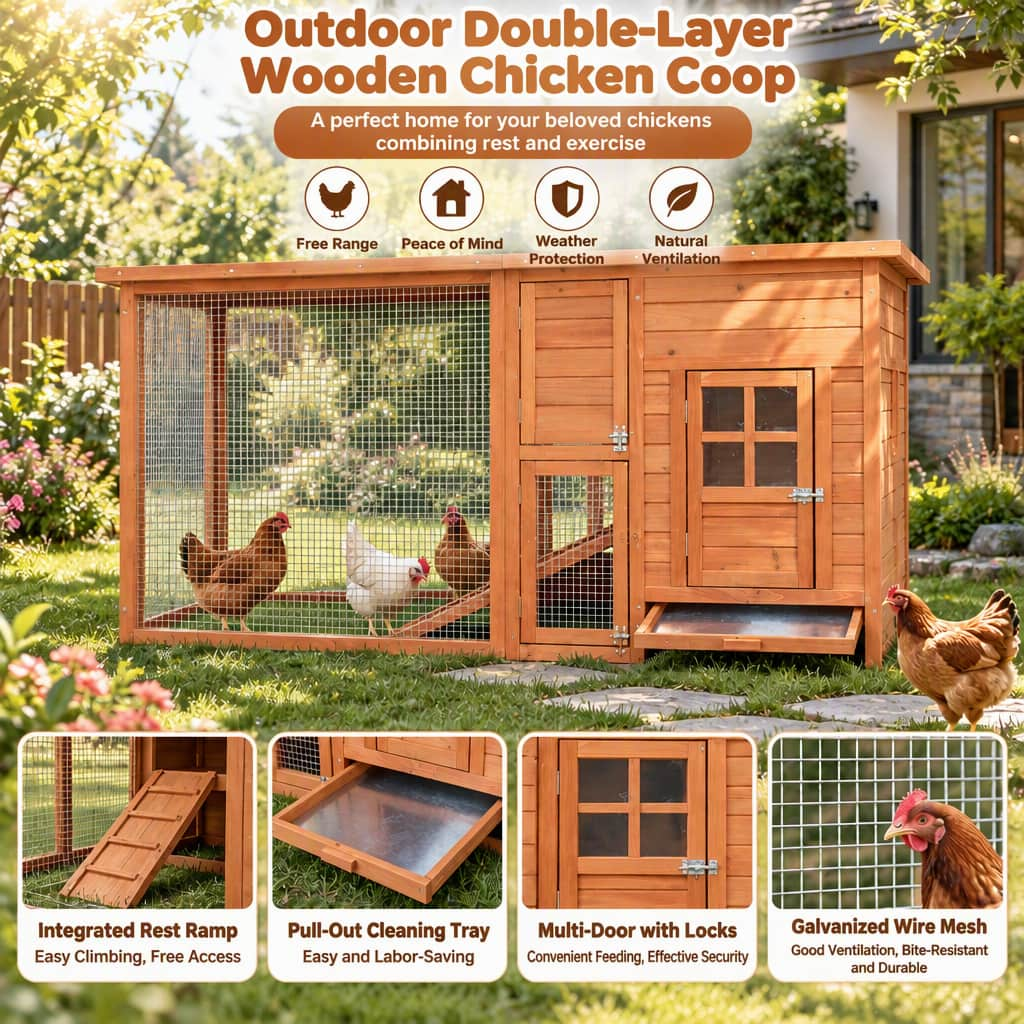
Shaw Ye's chicken coop range includes models made with Chinese fir wood, combining timber construction with practical features such as nesting areas, access doors, ramps, and wire-mesh enclosures. Buyers can review the wooden chicken coop collection to compare product structures and configurations.
For wholesale projects, it is useful to discuss target dimensions, wood specifications, finish requirements, packaging, assembly methods, and order quantities before confirming a production plan. This helps align the final product with the expectations of the destination market.
Frequently Asked Questions
Is fir or pine better for a chicken coop?
Both can be suitable. Fir is often selected for its balance of workability and structural use, while pine is a cost-effective and versatile option. The exact timber grade, drying, protective finish, and coop design are more important than the species name alone.
Is cedar worth the extra cost?
Cedar may be worthwhile for premium products or components exposed to outdoor conditions, depending on the species. For a complete large chicken coop, however, using cedar throughout may raise the selling price significantly. Buyers should compare the expected performance benefit with the additional material cost.
Does a wooden chicken coop need waterproof treatment?
Most outdoor wooden coops benefit from suitable weather protection. Roof coverage, ground clearance, drainage, and an appropriate exterior finish work together to reduce moisture damage. The selected coating should be suitable for the intended animal-housing application.
Is Chinese fir suitable for outdoor chicken coops?
Chinese fir can be used for outdoor coop construction when the timber is properly selected, dried, processed, and protected. Buyers should evaluate the complete structure, including the roof, base, joints, and surface finish.
What should importers ask a chicken coop manufacturer?
Ask about timber species and grade, drying process, finish specifications, product dimensions, flock capacity, mesh material, packaging, customization options, lead time, and quality inspection procedures. These details make supplier comparisons more meaningful.
Looking for a wooden chicken coop supplier? Contact Shaw Ye to discuss timber specifications, product configurations, and customized wooden chicken coop solutions for your wholesale or retail business.