When it comes to cabinet materials, everyone knows solid wood kitchen cabinets are sturdy and aesthetically pleasing. However, their steep price and heavy weight make them unsuitable for projects with tight budgets. Therefore, many alternative engineered wood panels have emerged, including plywood, MDF, and particleboard, all widely adopted in cabinet manufacturing for their affordable prices and outstanding cost performance.
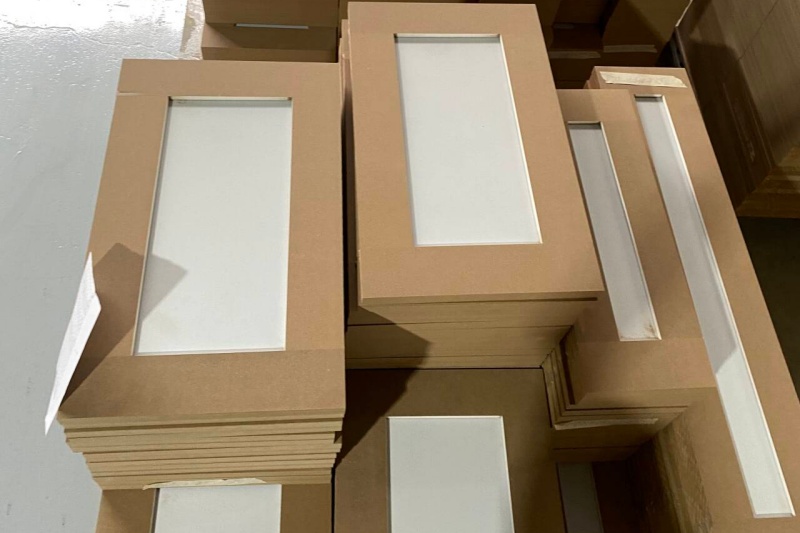
MDF is an engineered wood board manufactured by crushing wood fibers and bonding them with adhesive under compression. Many people believe its structure makes it unfit for high-humidity spaces like kitchens, yet the answer to the question "Can MDF be used for kitchen cabinets?" is yes. MDF is frequently used as the core panel of cabinet doors to prevent warping. Beyond door cores, MDF also works well for door frame borders, decorative veneers, and full cabinet carcasses.
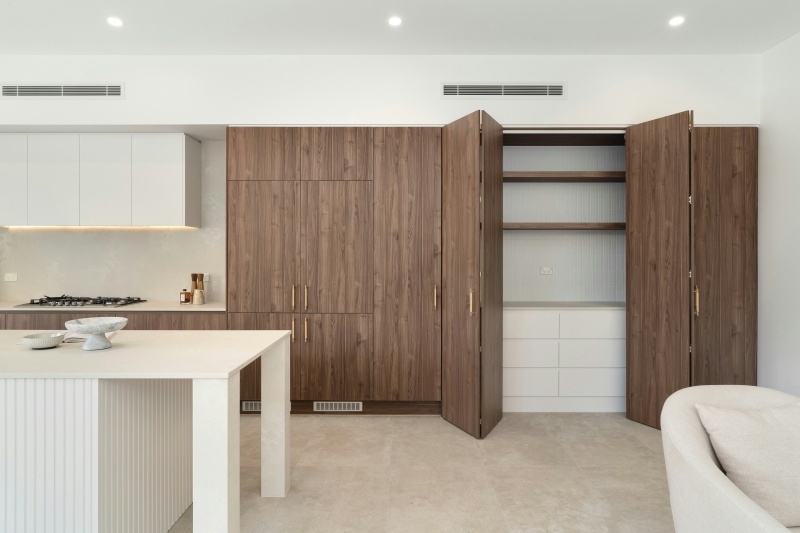
What Is MDF?
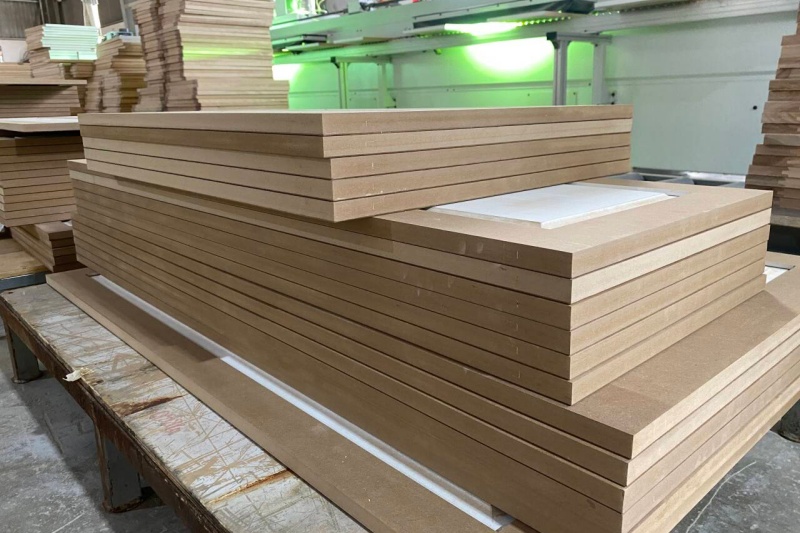
Before evaluating whether medium-density fiberboard suits cabinetry, it is critical to understand its composition and production process, as these factors directly determine its performance in kitchen environments. MDF is an engineered wood product: manufacturers first grind hardwood or softwood scraps into fine wood fibers, mix the fibers with synthetic resin adhesives, then press the mixture under high temperature and pressure to form dense, uniform boards.
Unlike plywood, which is made by gluing thin wood veneers together, MDF features a homogeneous internal structure with no visible wood grain and an ultra-smooth flat surface. This consistent density and absence of natural wood defects are its core advantages for cabinet making. Still, its vulnerability to water and moisture creates limitations—water damage is a common kitchen hazard, so proper protection against kitchen steam is mandatory.
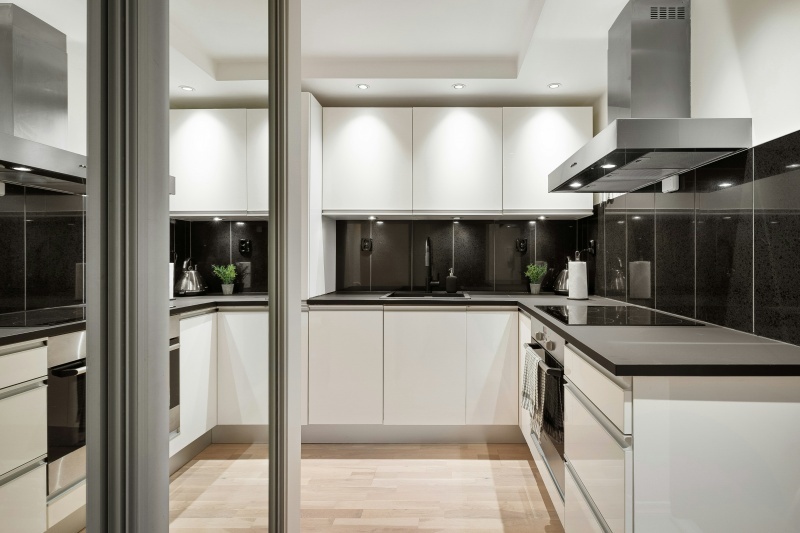
Advantages of MDF for Kitchen Cabinets
MDF’s widespread use across the cabinet industry stems from its unique merits. When applied correctly, it outperforms solid wood and plywood for certain cabinet components and design styles in kitchens:
1. Ultra-smooth surface for superior finishing
MDF boasts an extremely fine, uniform surface free of natural wood grain imperfections. It absorbs paint, primer, and veneer evenly, making it an ideal substrate for high-gloss baking paint, vacuum forming, membrane pressing, and wood veneer lamination. It flawlessly delivers diverse decorative finishes including high-gloss, matte, and intricate carved detailing with premium visual texture.
2. Exceptional machinability
With its fine, consistent texture, MDF is easy to cut, mill, and carve. It effortlessly supports complex custom shapes such as European-style carvings and curved door panels—designs difficult to achieve with solid wood or plywood. It delivers unmatched design flexibility to satisfy personalized styles ranging from modern and European to light luxury. For custom cabinet manufacturers, MDF’s ease of processing unlocks endless design possibilities while ensuring consistent, high-quality finished products.
3. Excellent dimensional stability
Kitchen temperatures and humidity fluctuate constantly, causing solid wood cabinets to expand, contract, deform, or warp over time. By contrast, MDF maintains exceptional dimensional stability within standard indoor humidity ranges, featuring a much lower expansion rate than solid wood. It resists warping and keeps tight door gaps, extending the cabinet service life.
4. High cost performance with controllable expenses
For homeowners and contractors working with limited budgets, high-quality affordable MDF kitchen cabinets are a cost-effective option. MDF costs far less than solid hardwood. Its uniform density allows quick cutting, drilling, and shaping with standard woodworking tools, cutting down construction time and material waste to lower overall custom cabinet production costs. It perfectly matches renovation demands with moderate budgets prioritizing attractive appearances and elaborate designs.
Disadvantages of MDF for Kitchen Cabinets
Despite its notable strengths, MDF carries clear drawbacks, especially in harsh kitchen environments marked by humidity, high temperatures, and frequent abrasion. Recognizing these limitations prevents financial losses and guarantees long-term cabinet performance:
- Poor moisture resistance: Constructed from compressed wood fibers, MDF rapidly swells, bulges, and even rots upon water absorption. Kitchen steam and splashing water easily trigger permanent deformation of cabinet carcasses.
- Weak screw holding power: Its loose fibrous structure cannot grip screws securely; fittings loosen after repeated opening/closing or heavy loading. Holes cannot be re-tightened once stripped, shortening cabinet lifespan and compromising safety.
- Relatively poor environmental performance: MDF production relies on large volumes of adhesive, resulting in higher formaldehyde emissions compared to solid wood. Low-grade MDF carries significant risks of excessive formaldehyde release. In enclosed, high-temperature kitchen spaces, this degrades indoor air quality and endangers human health.
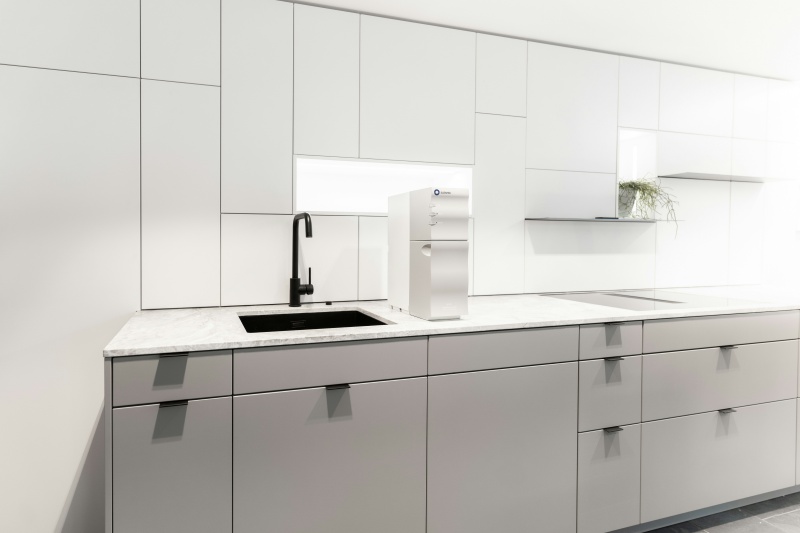
Ideal Application Scenarios for MDF Kitchen Cabinets
MDF’s drawbacks do not rule it out for kitchen cabinetry. With proper deployment, it becomes an excellent cabinet material. Below are its most suitable applications:
1. Cabinet doors and drawer fronts
This is MDF’s most common and effective use case. Properly sealed cabinet doors and drawer panels rarely come into direct contact with water, fully leveraging MDF’s smooth surface and stable dimensions. Melamine-laminated MDF door panels deliver flawless long-lasting finishes with strong resistance to shrinkage and warping, ideal for wall and base cabinet doors (excluding sink base doors, which face heightened moisture exposure).
2. Decorative moldings and trims
MDF’s superior machinability makes it perfect for custom decorative moldings, crown molding, and base trims. Its sleek surface produces sharp, clean decorative lines that can be painted to match cabinet doors for a cohesive overall aesthetic. Compared to solid wood moldings, MDF alternatives cost less, offer consistent quality, and avoid natural defects or uneven wood grain patterns.
3. Wall cabinets (dry zones)
Wall cabinets endure far less moisture and weight load than base cabinets, making them well-suited for MDF. Manufacturers may build full wall cabinet carcasses from MDF or only use MDF for door panels, based on budget and durability requirements. To offset MDF’s weak screw holding capacity, install dedicated engineered wood screws or threaded inserts when mounting hinges and slides for reinforced hardware stability.
4. Sideboards and storage units
Sideboards and storage fixtures such as sink-free kitchen islands occupy low-humidity, low-impact zones where MDF performs exceptionally well. Its dimensional stability keeps carcasses flat and functional long-term, and its smooth surface accepts paint finishes that blend seamlessly with overall kitchen decor.
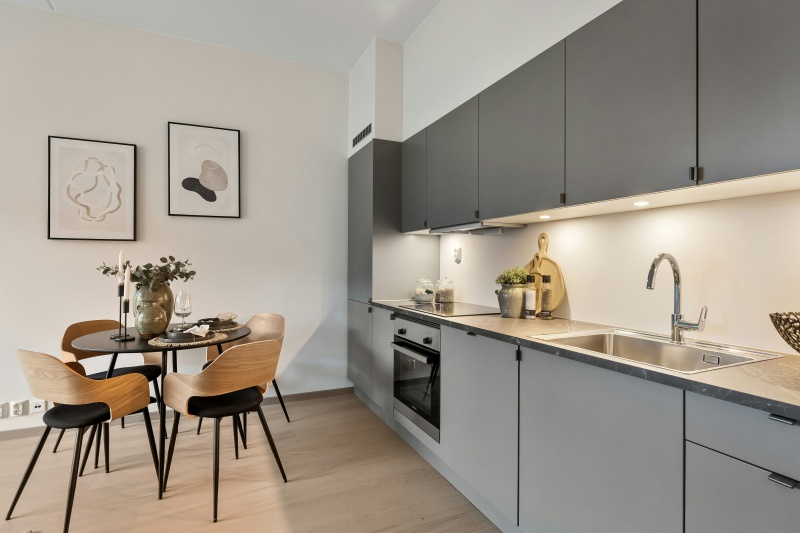
Unsuitable Scenarios for MDF Kitchen Cabinets
While MDF can be used for kitchen cabinets, avoid budget-friendly MDF products in the following zones to prevent severe damage and prolong service life:
- Sink base cabinets: Sink bases face extreme risks of moisture buildup, water leaks, and steam, which rapidly swell and ruin MDF. High-quality plywood kitchen cabinets are the superior choice for sink bases.
- Heavy-load base cabinets and tall pantries: Base cabinets and tall pantries housing heavy appliances (refrigerators, dishwashers) or large cookware require robust structural strength; plywood or solid wood is recommended.
- Areas with direct high heat exposure: Avoid MDF cabinets adjacent to stoves, ovens, or dishwashers without heat barriers such as metal or tile splatter guards. Persistent high temperatures warp and discolor MDF.
- Outdoor or semi-outdoor kitchens: MDF is not designed for exterior use; rain, humidity, and extreme temperatures cause rapid deterioration.
Performance Comparison: MDF vs Plywood vs Solid Wood
| Performance Index | MDF | Plywood | Solid Wood |
| Paint Finish Effect | Excellent (smooth, uniform, zero visible grain) | Good (gap filling required for flawless results) | Fair (grain bleed-through likely; extensive pre-treatment needed) |
| Dimensional Stability | Excellent (anti-warping, anti-shrinking) | Good (minimal expansion and contraction) | Fair; natural thermal expansion and contraction |
| Moisture Resistance | Moderate (tolerates minor splashes, not fully waterproof) | Good (marine-grade plywood offers full waterproofing) | Fair (varies by wood species; full sealing required) |
| Structural Strength | Low (prone to denting, weak screw holding) | High (sturdy and durable, strong screw grip) | High (hard texture, exceptional screw holding power) |
| Price | Low (best cost performance) | Medium (higher than MDF) | High (premium high-cost material) |
| Machinability & Design Flexibility | Excellent (supports precise, intricate custom shapes) | Good (limited by wood grain layers) | Fair (restricted by natural grain and knots) |
Final Verdict: Is MDF Suitable for Kitchen Cabinets?
MDF can be utilized for kitchen cabinets, yet only in appropriate zones with professional installation and regular maintenance. It is not a universal material, and its limitations—notably poor moisture resistance and low structural strength—must be fully considered.
For homeowners prioritizing smooth paint finishes, cost efficiency, and flexible custom designs, moisture-resistant MDF with full sealing treatment is perfect for cabinet doors, decorative moldings, wall cabinets, and sideboards. However, avoid MDF in damp zones such as sink bases and heavy-load base cabinets; plywood or solid wood delivers greater durability and reliability here.
Ultimately, your choice between MDF and alternative materials depends on your budget, design preferences, and kitchen usage habits. By understanding its pros and cons and following professional installation practices, you can maximize MDF’s advantages to build attractive, functional, long-lasting kitchen cabinets while controlling total costs.
If you remain uncertain whether MDF fits your kitchen space, feel free to consult us. As a professional cabinet manufacturer and supplier, Union Wood will recommend the most suitable materials tailored to your kitchen layout, usage demands, and budget, guaranteeing aesthetic appeal and long-term durability for your cabinetry.